
Indigenous Repair Activities 2025
The annual fall series of the Indigenous Repair Team advances the commitments of Eighth Street’s Land Acknowledgment Statement, especially focusing on the original inhabitants of the land where we live: the Potawatomi and Miami People. In short, those commitments are deepening our appreciation for their history and resilience, advocacy and repair, and joining in the care of their ancestral land and all creation.
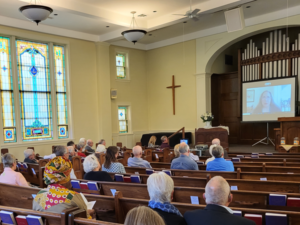
In the September 7 Connections Class, Sarah Augustine, Executive Director of the Coalition to Dismantle the Doctrine of Discovery, described the Land Justice Fund, one of the recipients of Eighth Street’s 2025 reparative debt payment. The fund enables Indigenous groups to buy back land that was unjustly taken for white settlement and also supports the Coalition’s work to dismantle the current laws and policies that make landback necessary.
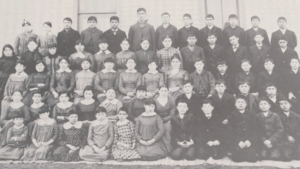
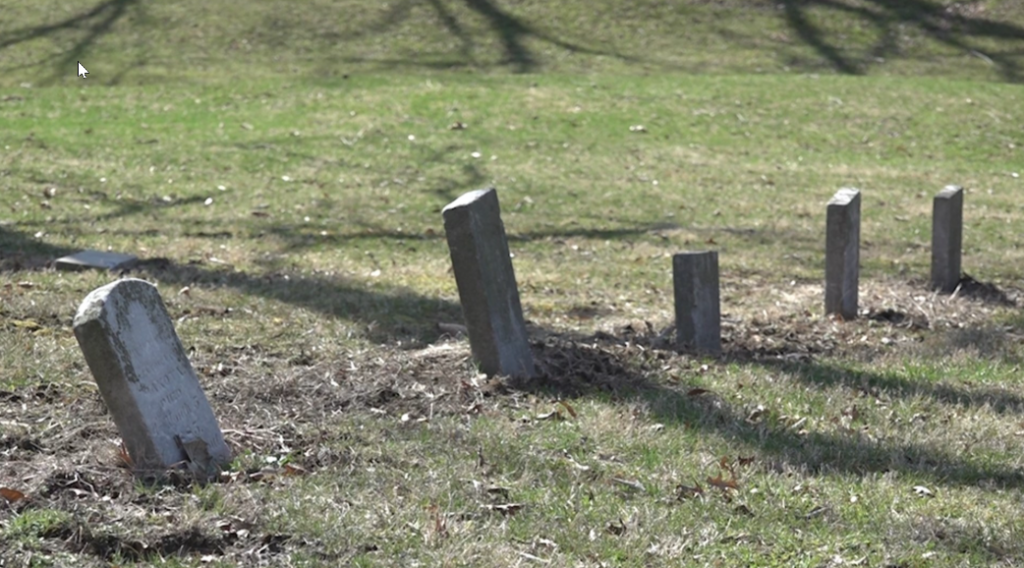
The following week, the class viewed a documentary based on research by Madison Stacey (Channel 13 WTHR NBC), Investigation into Native American Boarding Schools in Indiana . White’s Indiana Manual Labor Institute was run by Quakers with federal funding from 1882 to 1895. The graves of at least thirteen children remain buried on the property including four who were Oglala Sioux from Pine Ridge Reservation. White’s Residential and Family Services operates today on its historic campus in Wabash, IN. St. Joseph’s Indian Normal School was run by Catholic priests in Rensselaer from 1888 to 1896. It later became St. Joseph’s University.
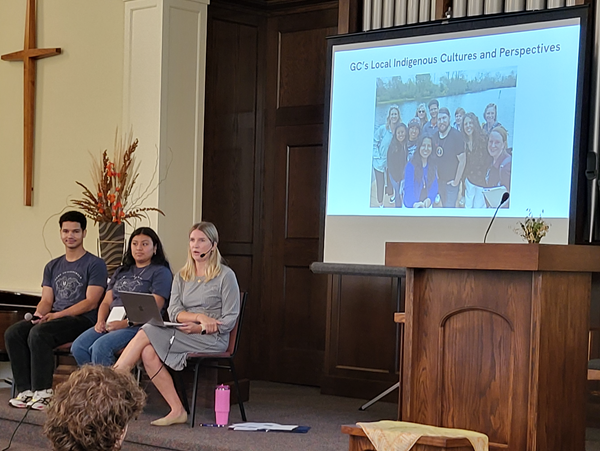
On September 21, two Goshen College students and Professor Anna Groff, shared reflections from their May term class, Local Indigenous Cultures and Perspectives. The group had multiple learning opportunities with Pokagon Band Potawatomi in Michigan and Miami in Indiana.
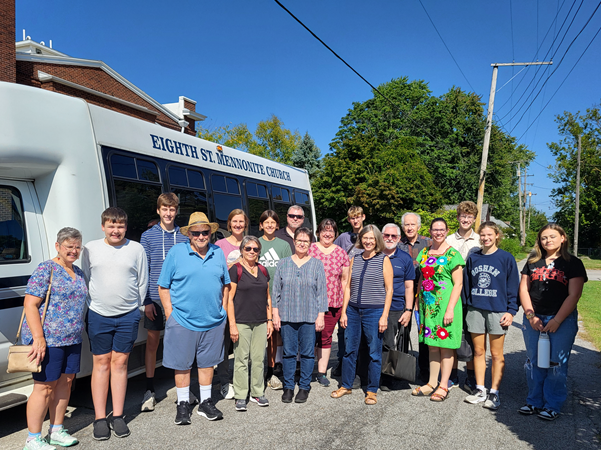
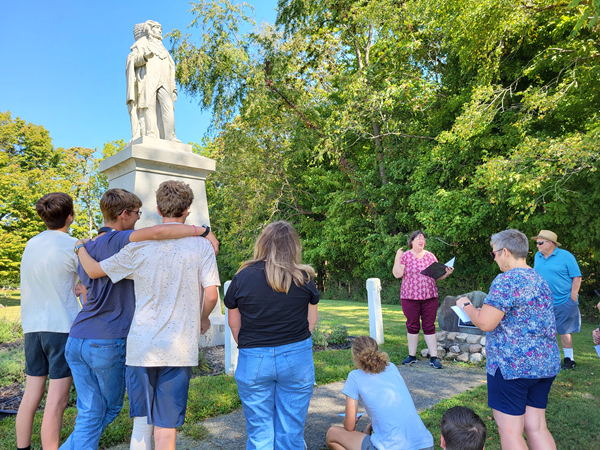
The final Connections class session on September 28 was an introduction to the Potawatomi Trail of Death with a documentary created by descendants of Trail survivors, Forced From Land and Culture – Removal. That same afternoon, seven youth and twelve adults traveled by church bus to six sites along the first two days of the 1838 trek. At each stop, we ended with a litany, “We remember you… We lament this Trail of Death… Guide our feet, O Lord, on a Trail of Life.”
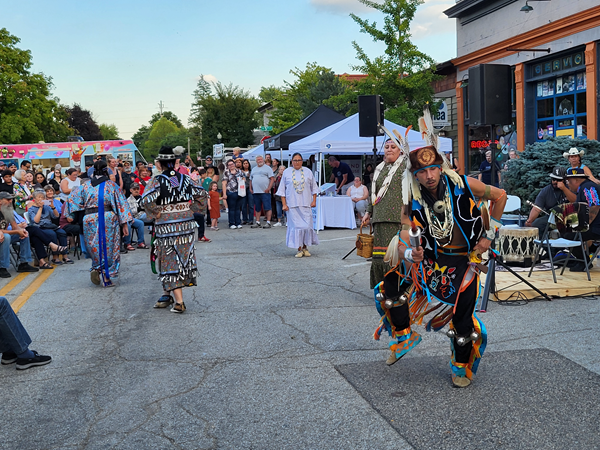
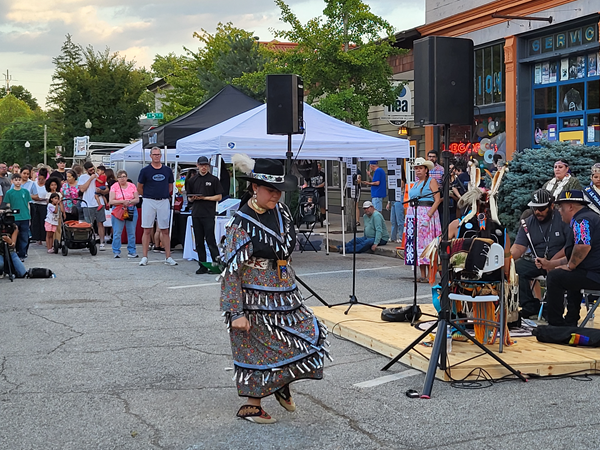
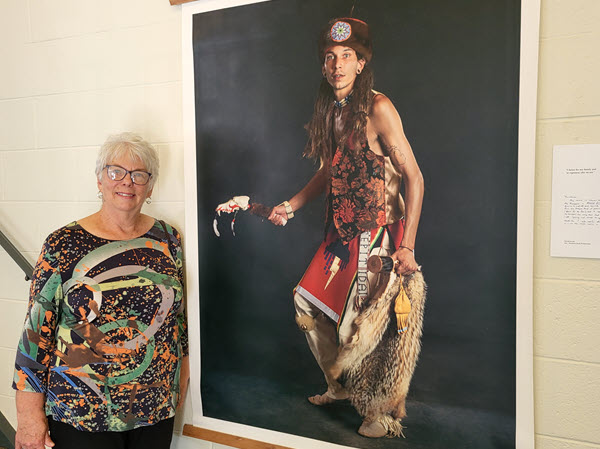
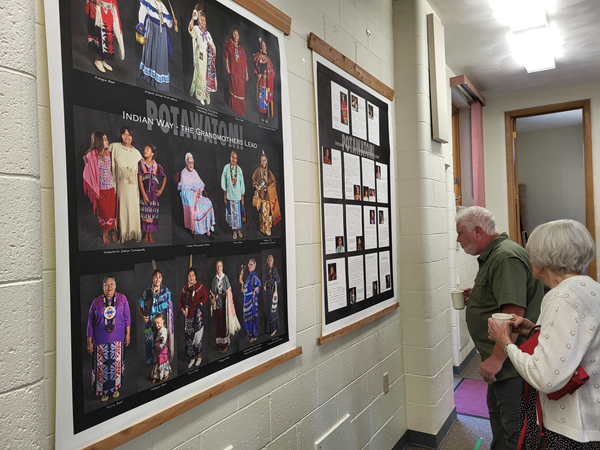
The culmination of the fall series was the Goshen City Indigenous People’s Day celebration with dancing, drumming and storytelling by members of the Pokagon Band of Potawatomi. A dancer at the downtown event, Skylar Alsup, was visually present at Eighth Street Church. His photo was one of several by Sharon Hoogstraten displayed in the foyer and the Fellowship Hall during the month of September.
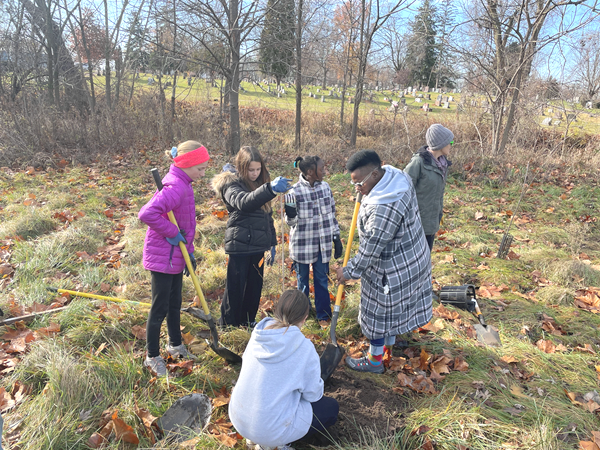
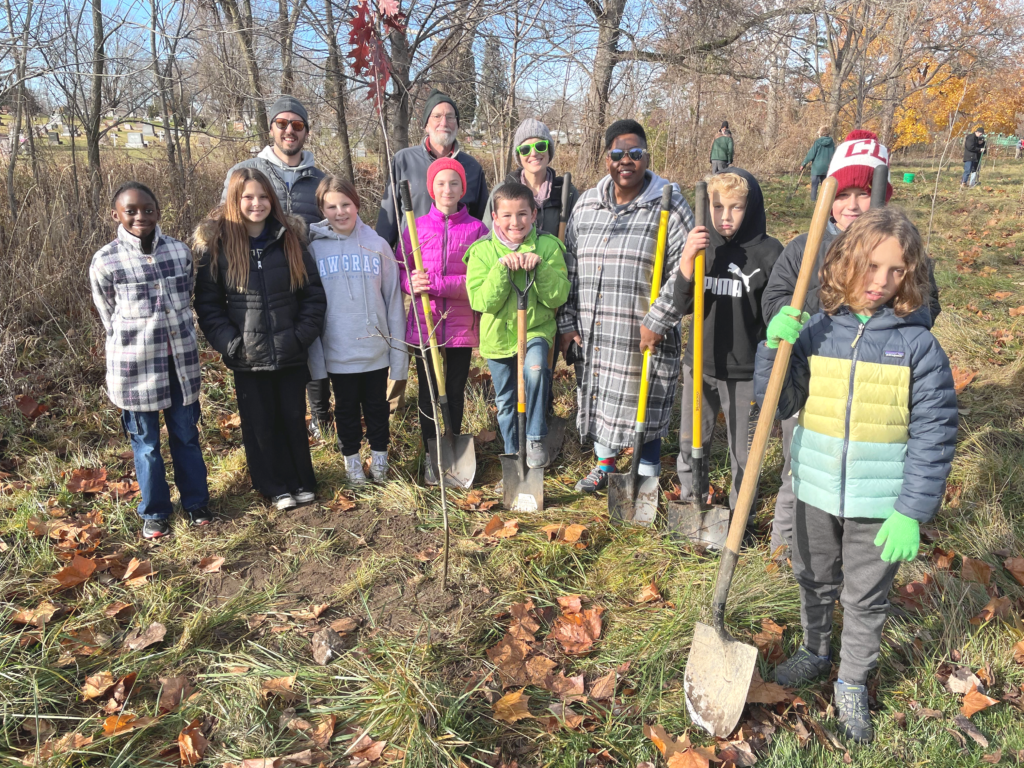
In November, eight youth and five adults from the Eighth Street Church Venture Club advanced the commitment to care for the ancestral land of the Potawatomi and the Miami. They joined with the local Faith in Action cohort of the Anabaptist Climate Collaborative to plant trees in Oakridge Park on the north side of Goshen.
Eighth Street’s first budgeted reparative debt payment was divided between the Land Justice Fund of the Coalition to Dismantle the Doctrine of Discovery and the Miami Nation of Oklahoma Cultural Resources Extension Office in Fort Wayne. This office services Miami Tribal citizens in the ancestral homelands by promoting history, language, culture and traditions.
Land Justice Fund